

Hair Loss Solutions (FUE)
FUE (Follicular Unit Extraction) hair transplants are a precise method of restoring hair by moving individual follicles from a donor area to the areas affected by thinning or hair loss. The recipient area is numbed, small incisions are made, and the follicles are carefully placed. Over time, these transplanted follicles produce new hair, helping to restore natural-looking coverage.
The number of follicles needed depends on each person’s hair loss and the desired density. Careful planning ensures the transplanted hair blends seamlessly with existing hair for the most natural results.
Hair restoration is not limited to scalp hair — treatments are also available for eyebrows and women’s hair loss, as well as men’s. To learn more about FUE or other hair loss solutions, or to arrange a free consultation, contact us today via phone or our online form. We’re here to help you feel your best again.
Evolution of Hair Transplant Techniques
Hair transplant procedures have developed significantly over the decades, offering more natural results and faster recovery times.
The journey began in the 1950s with punch grafting, where small sections of scalp were transplanted to thinning areas. This was followed by strip harvesting, which involved removing a strip of scalp and dividing it into individual follicular units for transplantation.
In the 1990s, Follicular Unit Transplantation (FUT) became the standard approach, using naturally occurring groups of one to four hairs to create more natural-looking results.
The early 2000s introduced Follicular Unit Extraction (FUE), a major advancement that allows individual hair follicles to be harvested directly from the donor area. This technique minimises scarring and shortens recovery time, making it a popular choice today.
Main Hair Transplant Methods
-
Follicular Unit Extraction (FUE): Individual hair follicles are extracted directly from the donor area using a micro-punch tool.
-
Follicular Unit Transplantation (FUT): A strip of scalp is removed and dissected into individual follicular units for implantation.
-
Direct Hair Implantation (DHI): A variation of FUE where extracted follicles are implanted directly into the recipient area using a specialised tool.
These advances ensure more natural results, reduced scarring, and improved overall patient experience.
1. Initial Consultation
The first step in any hair restoration journey is a personalised consultation. This allows the surgeon to assess your hair loss, understand your goals, and discuss realistic outcomes. You’ll also go over treatment options, timelines, and costs before agreeing on the best plan and scheduling your procedure.
2. Procedure Planning
Once a procedure is agreed upon, careful planning takes place. This includes designing the hairline, estimating the number of grafts needed, and creating a detailed plan for extraction and implantation to achieve natural, balanced results.
3. Pre-Surgery Preparation
Patients receive guidance to prepare for surgery, such as avoiding smoking, alcohol, and strenuous exercise in the days leading up to the procedure. A short recovery period is recommended, and some may choose to take additional time off work to support optimal healing.
4. The Surgery Process
Hair transplants, such as FUE, are performed by qualified surgeons and their experienced teams using advanced equipment. The procedure involves:
-
Administering local anaesthetic to the donor and recipient areas.
-
Extracting individual hair follicles using a micro-punch tool.
-
Carefully handling the follicles with specialised forceps.
-
Sorting and storing the grafts.
-
Implanting the follicles into the recipient area for natural hair growth.
5. Tools and Technology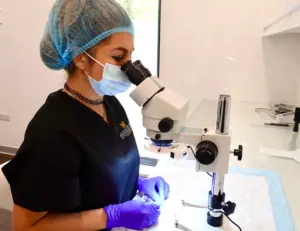
Modern hair transplant procedures rely on precision instruments and equipment, including:
-
Magnifying equipment: Ensures accurate extraction and placement.
-
Micro-punch tools: Create tiny openings for follicle removal.
-
Hair-transplant forceps: Handle and implant follicles safely.
This structured approach ensures natural-looking results, minimal scarring, and a smoother recovery for patients seeking hair restoration.
Hair Transplant Aftercare Guide
Days 1–4: Immediate Recovery
During the first few days after your procedure, focus on rest and carefully following all post-operative instructions. This initial period is vital for ensuring the long-term success of your hair transplant.
Days 5–13: Healing and Wash Routine
Begin the recommended washing program to support scab recovery and keep the scalp clean. Swelling should gradually reduce, and both the donor and recipient areas will start to stabilise.
Day 14: Resuming Normal Activities
By around two weeks, most patients can return to their usual routines. Continue a regular washing routine, and it is generally safe to wear hats, exercise, and enjoy sunlight exposure.
12-Month Review
A follow-up around 12 months after surgery helps assess the growth and overall results of the transplant. Earlier check-ups can be arranged if needed, but the final results are typically evaluated at the one-year mark.
Proper adherence to aftercare guidance is key to achieving natural, long-lasting results from your hair restoration procedure.