

If you’re dealing with thinning hair, you’ve probably noticed the huge range of products claiming to boost growth and restore thickness. While many lack strong scientific backing, black seed oil is one natural option that has shown promising results. In one controlled study, participants with telogen effluvium experienced improvements in hair density and thickness when using black seed oil.
Beyond its potential for supporting fuller-looking hair, this plant-based oil is known for its anti-inflammatory, antioxidant, and antimicrobial properties — all of which may contribute to a healthier scalp environment.
Below, you’ll find a clear, science-informed overview of what black seed oil may (and may not) do for your hair, including:
-
The key benefits it may provide
-
Possible side effects and precautions
-
Tips on making and using black seed oil at home
-
Natural alternatives and other hair-growth options
What Is Black Seed Oil?
Black seed oil — also called black cumin seed oil or kalonji oil — is extracted from the seeds of the Nigella sativa plant. These tiny black seeds, used for centuries in cooking and traditional remedies, contain a compound called thymoquinone. This ingredient is thought to play a major role in the oil’s potential hair and scalp benefits thanks to its antioxidant and anti-inflammatory effects.
Key Benefits of Black Seed Oil for Hair and Scalp
Black seed oil is one of the few natural remedies that shows genuine potential for supporting hair and scalp health. Early research suggests it may help with certain types of shedding, soothe irritation, and strengthen the scalp environment — all of which contribute to healthier-looking hair. Here are the main benefits: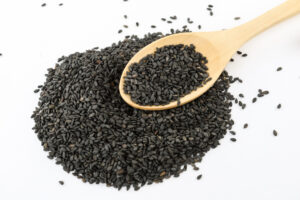
1. It May Help Reduce Stress-Related Shedding
Telogen effluvium is a form of temporary hair shedding triggered by physical or emotional stress. It often causes diffuse thinning and, in some cases, scalp discomfort. In a small placebo-controlled study on women with acute telogen effluvium, those using black seed oil experienced noticeable improvements in hair density and thickness, along with reduced inflammation. More research is still needed, but the early findings are encouraging.
2. It Provides Antioxidant Support
Black seed oil contains several antioxidant compounds, including thymoquinone and carvacrol. Antioxidants help neutralise free radicals — unstable molecules linked to oxidative stress, which can contribute to various forms of hair loss. By reducing oxidative stress, black seed oil may help protect hair follicles and support healthier growth over time.
3. It May Soothe an Inflamed or Irritated Scalp
Thanks to its anti-inflammatory and immune-modulating properties, black seed oil shows promise in improving inflammatory scalp conditions. Research in both animals and humans suggests it may help with inflammatory skin issues like eczema and psoriasis, though more studies are needed to confirm the benefits specifically for the scalp.
4. It Shows Antibacterial and Antifungal Activity
Black seed oil has demonstrated antimicrobial effects in laboratory studies, suggesting it may help with issues like dandruff, seborrheic dermatitis, or mild scalp folliculitis. However, its effectiveness on the human scalp isn’t fully established yet, as studies have mostly been conducted in vitro.
5. It May Help Support a Healthy Hair Growth Cycle
Preliminary research indicates that black seed oil may influence the hair growth cycle by helping regulate compounds linked to shedding, including prostaglandin D2 (PGD2). By supporting the growth (anagen) phase and reducing early entry into the shedding (telogen) phase, black seed oil may help maintain fuller-looking hair.
6. It Helps Keep Hair and Scalp Moisturised
Black seed oil is rich in fatty acids that nourish and hydrate both the scalp and hair. This can help reduce dryness, improve softness, and minimise breakage — all of which contribute to thicker-looking, healthier hair overall. It can be used on its own or blended into a conditioning treatment for an extra moisture boost.
Potential Risks and Precautions of Black Seed Oil
When applied to the scalp, black seed oil is generally considered safe. The main concern is the possibility of an allergic reaction, such as contact dermatitis. To reduce the risk, it’s wise to perform a patch test on a small area of skin before using it more broadly. In rare cases, severe reactions can occur, which may require medical attention.
If taken orally, black seed oil can sometimes cause digestive issues or affect blood sugar levels, but these concerns are mostly relevant to ingestion rather than topical use.
Making and Using Black Seed Oil at Home
Black seed oil is widely available in stores and online, and buying pre-bottled oil is usually the easiest way to get a high-quality product. True seed extraction involves processes that are difficult to replicate at home.
If you want to make a DIY version, you can try this simple method:
-
Grind half a cup of nigella seeds into a fine powder and place it in a clean, sterilised jar or bottle.
-
Add one cup of a carrier oil, such as almond, argan, or coconut oil, and mix until the oil begins to darken.
-
Seal the container and leave it in a warm place for two weeks.
-
Strain out the seeds, stir the oil again, and transfer it to a bottle for use.
You can apply this mixture directly to your scalp or combine it with other nourishing oils. Black seed oil is generally low in toxicity, so adverse reactions are uncommon. However, some people may experience contact dermatitis, such as a rash or itchiness, so it’s wise to discontinue use if any irritation occurs.
Cold-press methods are also possible for those seeking a more traditional approach, but buying ready-to-use oil is often the most convenient and reliable option.
How to Apply Black Seed Oil to Your Hair

While black seed oil can be taken orally, it’s usually recommended to apply it directly to the scalp and hair. Topical use avoids most systemic side effects, though skin irritation is still possible.
To use black seed oil for hair:
-
Mix equal parts black seed oil with a carrier oil such as coconut or almond oil.
-
About an hour before washing, massage the mixture into your scalp.
-
Leave it on for 30–45 minutes.
-
Wash your hair with your regular shampoo and conditioner.
If you notice irritation, redness, or itching, discontinue use.
Can You Leave Black Seed Oil in Your Hair?
Black seed oil is generally gentle and safe to leave on the hair without rinsing. However, leaving it on for extended periods can cause build-up, potentially leading to dandruff, clogged pores, or scalp irritation. Regular washing is recommended if you choose to leave the oil in.
Black Seed Oil for Facial Hair
There is no conclusive evidence that black seed oil stimulates beard growth specifically. However, its antioxidant, antibacterial, and anti-inflammatory properties may support healthier hair follicles, soothe irritation from shaving, and reduce the risk of ingrown hairs or rashes.
Effect on Grey Hair
Black seed oil cannot reverse natural greying, though its antioxidant properties may help slow oxidative stress that contributes to premature greying. It is sometimes included in natural hair dye mixtures, which may darken white hairs temporarily, but it does not alter the natural greying process.
Other Natural Remedies for Hair Growth
Some natural oils, like pumpkin seed oil and rosemary oil, have shown potential to improve hair density in certain forms of hair loss. However, the effectiveness of natural remedies varies, and not all products on the market are supported by strong evidence. Nutritional supplements generally only improve hair growth if a deficiency is present.
Evidence-Based Alternatives to Black Seed Oil
The best approach to hair loss depends on its underlying cause. Some scientifically supported options include:
Medications:
-
Minoxidil: Can help with male or female pattern hair loss, alopecia areata, traction alopecia, and telogen effluvium by increasing blood flow to hair follicles.
-
Finasteride or Dutasteride: Effective for androgenetic hair loss in men by reducing DHT levels. Not recommended for premenopausal women due to hormonal effects.
Therapies:
-
Low-level laser or red light therapy: Stimulates follicles and improves hair growth.
-
PRP (platelet-rich plasma) treatments: Provide growth factors that support hair follicle repair.
Surgical options:
-
Hair transplant: Healthy hair follicles are moved to thinning areas. This is a permanent solution and can restore hair in advanced cases of hair loss.
Taking Action for Hair Loss
If you’re experiencing hair loss and are unsure which approach to try, it’s helpful to consult a qualified professional. They can help identify the underlying cause, explain the most effective treatments, and recommend a hair care routine tailored to your hair type and condition.